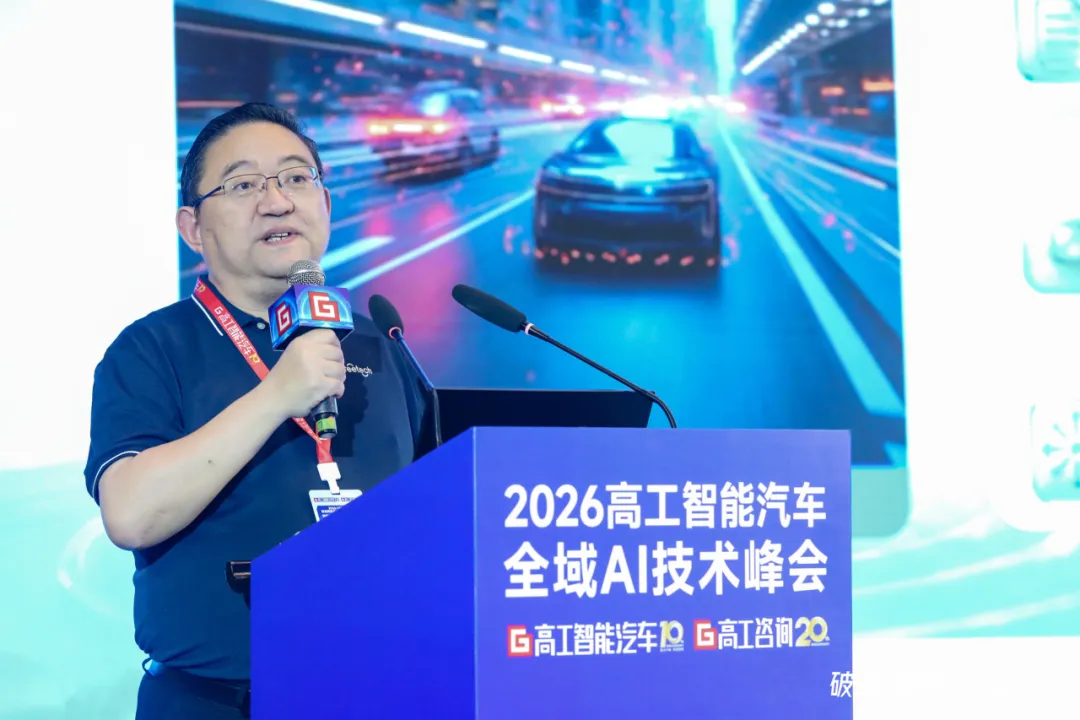
On July 28, at the GaoGong Intelligent Vehicle "Breaking the Cocoon · Intelligent Transformation 2026 Full-Domain AI Technology Summit," Dr. Shen Junqiang, Chief Scientist of Freetech, delivered a keynote speech titled Full-Stack AI: The Bridge to Scalable Physical AI. He presented the company's five-pillar full-stack AI system — encompassing "software, hardware, large AI models, data, and engineering" — and outlined the evolutionary roadmap from mass-produced intelligent driving toward infrastructure for the physical world.
Intelligent Driving Enters the "Deep Waters": Anchoring on "Scale" to Build Full-Stack AI Capabilities
In 2026, three waves — market, policy, and technology — are converging, bringing the industry to a critical inflection point. The penetration rate of L2 system in new passenger vehicles has reached 70%, NOA (Navigation on Autopilot) penetration has surpassed 30%, the mandatory national standard for L2 Advanced Driver Assistance Systems (ADAS) has been officially released, and end-to-end large AI models are reshaping the underlying architecture. The logic of competition has shifted comprehensively from "feature stacking" to "system integration." Dr. Shen pointed out that the supply chain is undergoing deep restructuring, and the extension path from "single-point intelligence" to "vehicle-wide AI" and then to "physical AI" is becoming increasingly clear.
Against this backdrop, Freetech, leveraging scaled mass production, has built a five-pillar full-stack AI system — "software & algorithms + hardware & software synergy + data closed loop + AI large models + engineering capabilities." Dr. Shen believes that each of the five modules carries distinct strategic value, collectively enabling the company to cross the 5-million-unit mass production threshold and continuously drive products toward higher-level iterations. Currently, intelligent driving is regarded as the most critical arena and the best proving ground for physical AI, opening a new window of opportunity for companies in this space. And full-stack AI is precisely Freetech's entry ticket to scalable physical AI.
Five Pillars in One — Software, Hardware, Data, Models, and Engineering: Software-Hardware Synergy with a Mass Production Closed Loop
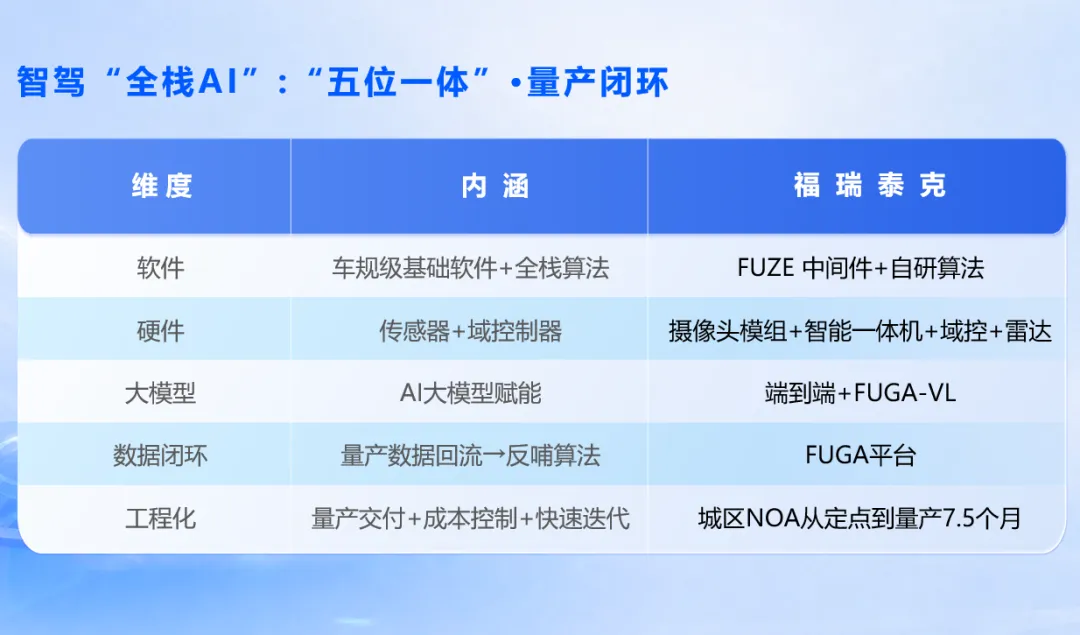
The full-stack AI of internet companies builds technological moats based on "chips + frameworks + models + applications." In the intelligent driving domain, full-stack AI manifests as a five-pillar capability centered on the closed loop of "mass production delivery" Using Freetech as an example, Dr. Shen further explained these five pillars: the software layer (FUZE middleware and proprietary algorithms), the hardware layer (camera modules, smart cameras, domain controllers, and radar products), large AI models (end-to-end models and the FUGA-VL vision-language large model), the data closed loop (the FUGA data platform's mass production data flywheel feeding back into algorithm iteration), and engineering (city NOA mass production efficiency). These five components are tightly interlocked, operating under unified orchestration and synergistic optimization. By breaking down software-hardware barriers, they enable the rapid integration of cutting-edge technologies, achieving high-quality, high-efficiency, and low-cost mass production along with continuous upgrades.
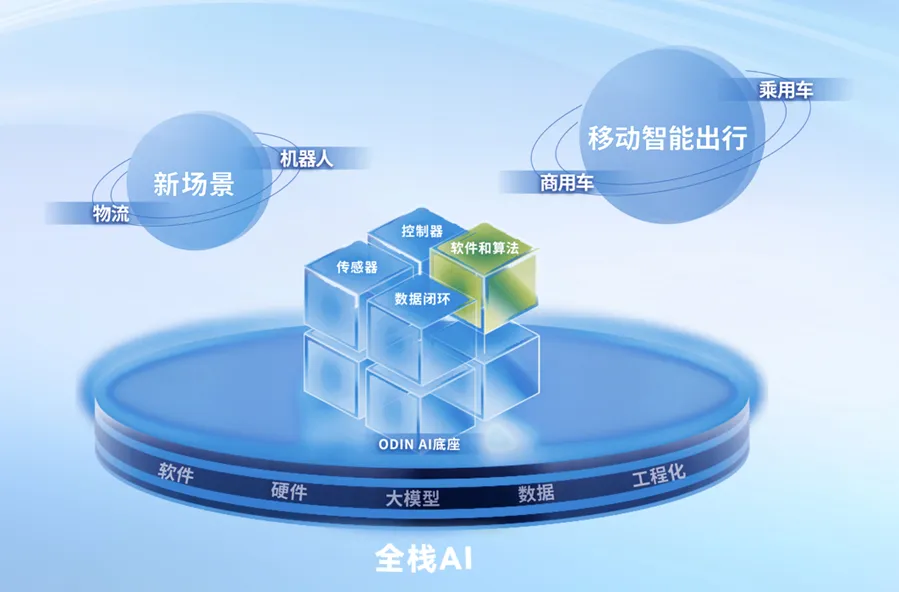
ODIN, as the core foundation of Freetech's full-stack AI capabilities, has completed a full-link integration validation across controllers, sensors, software & algorithms, and data closed loops in real world mass production. The commercialization process has driven ODIN's continuous evolution — from 1.0 software-hardware integrated architecture, to 2.0 Automated Driving Platform as a Service, to 3.0 large AI model foundation, and now to the current 3.5 full-stack AI stage. Next, ODIN will advance toward 4.0 full-domain AI and scalable physical AI, leveraging full-stack capabilities to open the door to the scaled deployment of physical AI.
Scale as the Strongest Endorsement: Moving Full-Stack AI from "Technologically Possible" to "Commercially Credible"
Dr. Shen emphasized that the essence of full-stack AI lies in translating cutting-edge technology into mass-producible, iterable, and reusable productivity — genuinely equipping mainstream passenger and commercial vehicles with advanced technologies. Centered on this principle, Freetech has achieved scaled deployment across key scenarios including passenger vehicles, commercial vehicles, and Robotaxi: accumulating partnerships with 55 OEMs, 430 nominated projects, 330 completed mass production projects, earning the trust from 3.5 million vehicle owners, and validating over 60 billion kilometers of safe mileage.
The continuous evolution of full-stack AI capabilities has accelerated the deployment of multiple outcomes. Among them, Freetech’s "Smart Drive for All Edition" achieves city NOA mass production with 128 TOPS of mid-range computing power, and has been deployed on over 20 vehicle models, bringing advanced intelligent driving from the RMB 300k vehicle tier down to the RMB 100k–200k mainstream segment. The FVR60 4D imaging radar, fused with AI algorithms, achieves a leap in scene understanding. The FUGA data closed-loop platform, incorporating the FUGA-VL large AI model, endows data with "deep thinking" capabilities. Meanwhile, the company's FT Ultra high-level solution now accounts for over 60% of company revenue, and the commercial value of full-stack AI is materializing.
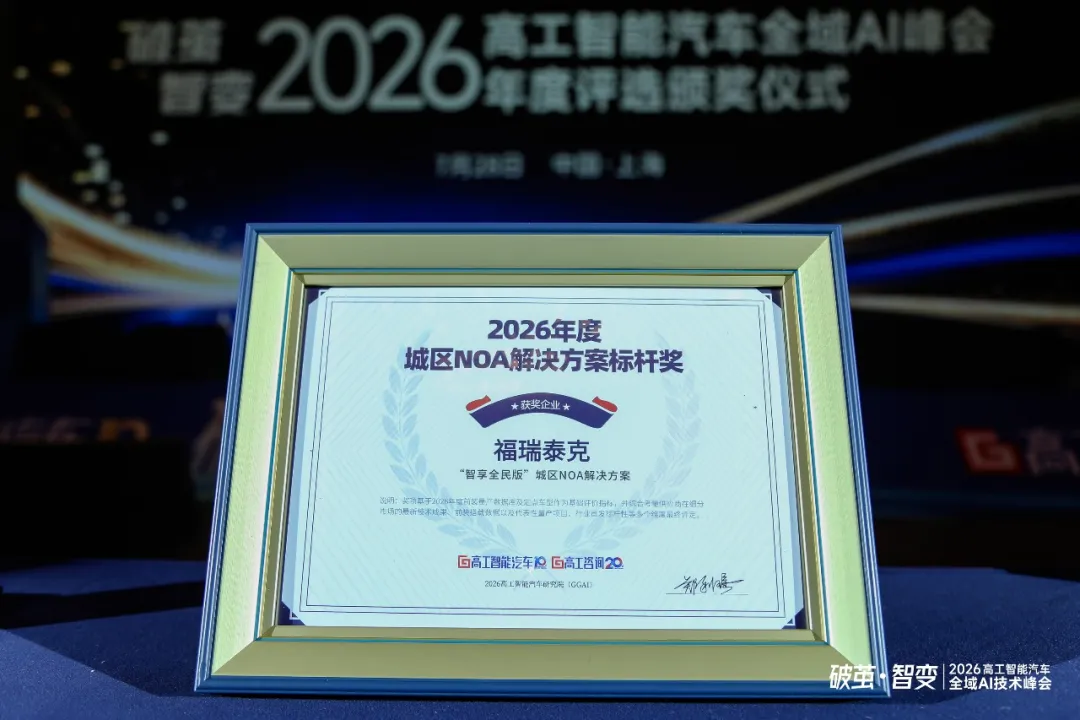
Freetech's "Smart Drive for All Edition" Honored with the "2026 City NOA Solution Benchmark Award"
From Automotive to Physical AI: Full-Stack Capabilities Transferrable Across Scenarios
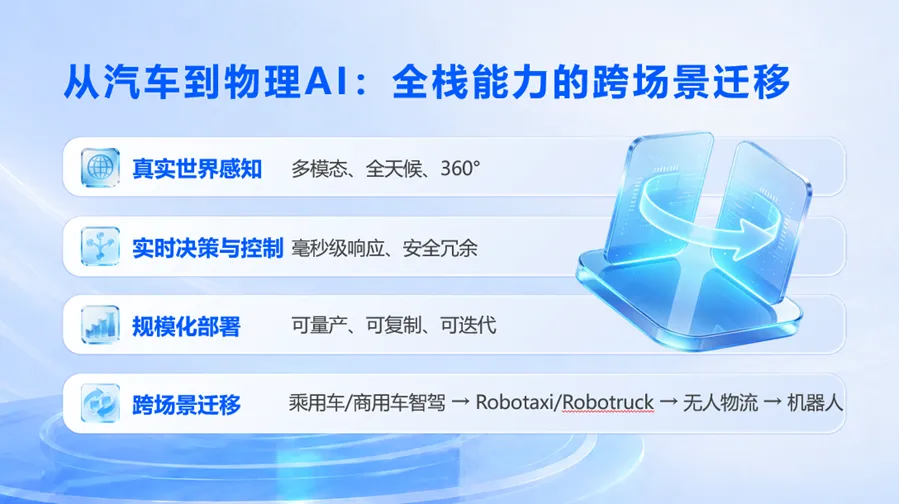
The supply chains of intelligent vehicles, embodied robots, and flying vehicles, highly overlap, giving the full-stack AI capabilities in the intelligent driving domain natural transferability. From passenger and commercial vehicle intelligent driving, to Robotaxi and Robotruck, to autonomous logistics robots, and ultimately to robotics — for suppliers possessing full-stack AI, cross-scenario transfer costs are lower and deployment is faster. This is the compounding effect brought by platform-level capabilities.
Dr. Shen concluded: "Ten years ago, we pursued domestic substitution for ADAS; today, we build the full-stack AI mass production foundation; tomorrow, we will construct the intelligent infrastructure for the physical world." Full-stack AI is the core bridge to scalable physical AI — the bridge has been built, and the road continues to extend.










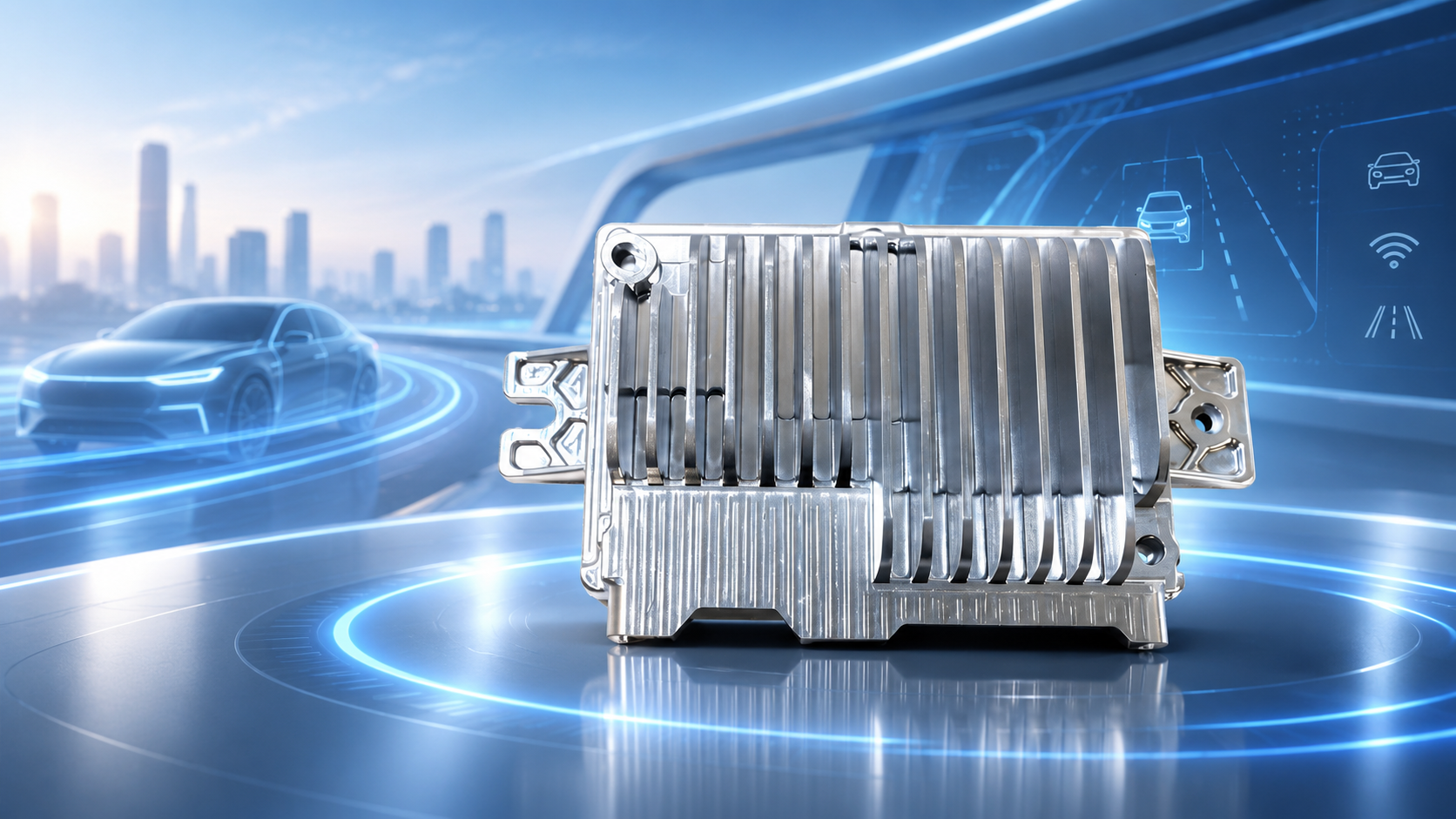 Company News2026/09/10Freetech Launches Volume Deliveries of Its J6B Solution as One of the Industry’s First to Reach Mass ProductionFind out more
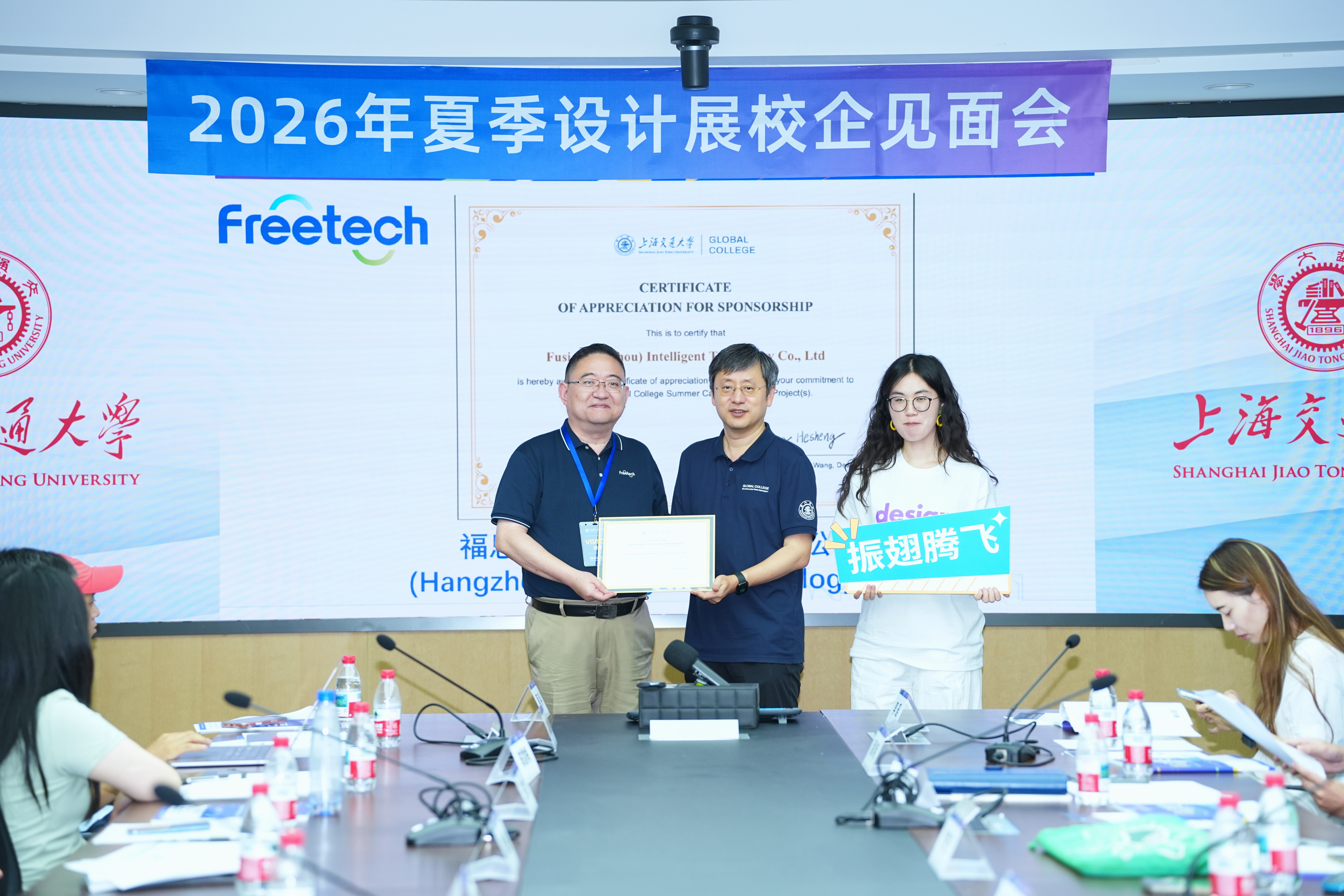 Company News2026/08/11Bringing Senior Projects to the Front Line of Mass Production: Freetech and SJTU Complete Their 2026 Summer University–Industry Collaboration ProgramFind out more
 Company News2026/07/29Freetech's Shen Junqiang: Full-Stack AI, the Bridge to Scalable Physical AIFind out more
 2026/07/22Freetech's "Fuxing" Solution Secures New Nominations from a Leading Global OEM,Chinese-built Solutions Accelerate Global ExpansionFind out more
 Company News2026/07/03Proton Motors Senior Executive Delegation Visits Freetech for Deep Exchange on Advanced Intelligent Driving TechnologiesFind out more